Home Guides
Door hardware finishes: Matching appearance with daily use
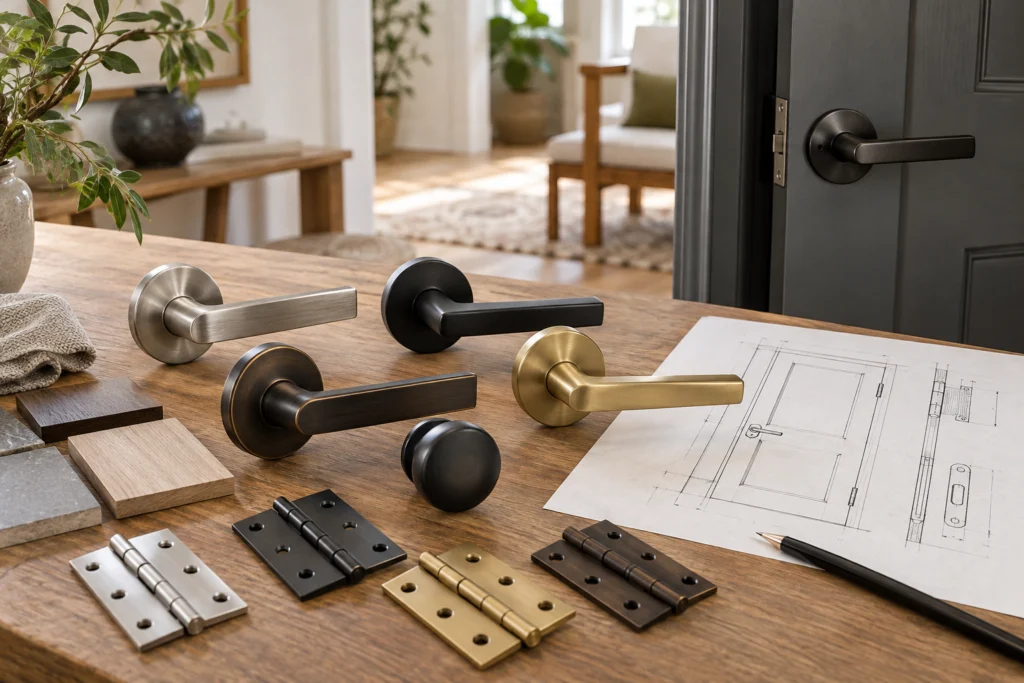
Door hardware is touched far more often than most decorative finishes. Choosing a handle should involve how it operates, how it is cleaned and whether the components fit the actual door. Colour coordination comes after those checks.
Start with the function of each door
Make a list of passage doors, rooms needing privacy and any exterior or rated assemblies. These uses may require different hardware. Do not swap components in a safety-related door set without checking the applicable product and professional requirements.
Try the proposed handle with the people who use it. Grip, leverage and operation may matter more than an attractive finish. Check that the handle does not strike a wall, conflict with trim or become difficult to reach behind furniture.
| Attribute | Practical check | Question for the supplier |
|---|---|---|
| Operation | Open and close using an ordinary grip | Is this mechanism suitable for the door’s use? |
| Finish | View beside hinges and adjacent metalwork | How is it maintained? |
| Dimensions | Check holes, thickness and backset | Will it fit without unsuitable modification? |
| Parts | Identify latches, strike plates and screws | Which compatible components are included? |
Match finishes without assuming identical names
A finish called brushed nickel by one manufacturer may differ from another brand’s version. Place samples together if a close match matters. Slight variation across separate rooms may be less noticeable than mixed finishes on one door.
Ask how the surface responds to approved cleaning and normal wear. Some finishes are intended to change in appearance, while others have particular care restrictions. Avoid abrasive cleaners or disinfectants unless the maker permits them.
- Photograph the existing door preparation before shopping.
- Record the hardware set for each door, including hinges and stops.
- Check whether replacement parts remain available.
- Keep installation instructions and finish-care notes after fitting.
Install for smooth operation
A handle is not correctly installed if the door must be forced to latch. Alignment, frame movement or an unsuitable strike position may need attention. Have the cause corrected rather than accepting binding as normal for new hardware.
For privacy sets, understand the intended emergency-release function and keep it usable. Where locks, access control or rated doors are involved, ask a qualified professional to specify compatible components rather than mixing parts by appearance alone.
Questions and answers
Must every metal finish in a home match?
No. Consistency within a doorway or a connected area may be enough. Practical suitability should take priority over an exact colour match across unrelated fixtures.
Can I use any cleaner on metal hardware?
No. Follow the finish manufacturer’s care instructions; abrasive or chemical products can damage some surfaces.
Why does the new latch feel stiff?
The issue may involve installation or alignment rather than the handle itself. Ask the installer to check smooth closing and latching before considering the job complete.