Home Guides
Garage storage ideas for bikes, skates and seasonal equipment
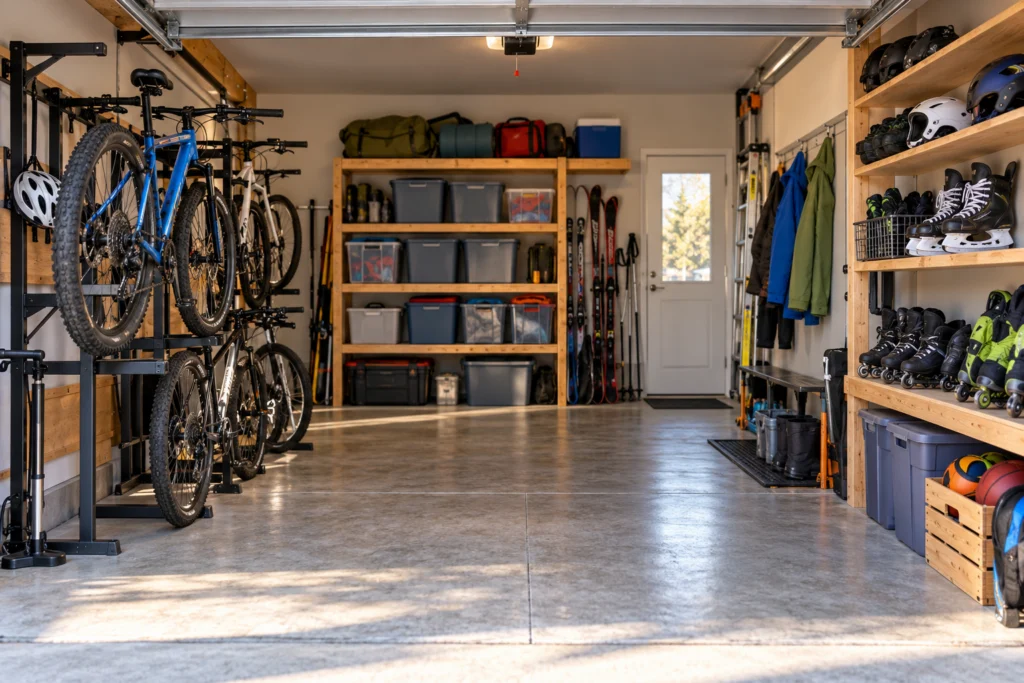
A garage can look spacious until a bicycle, hockey bag and car all need to move at once. Successful storage begins with those movements. A rack is only useful if the person who uses the equipment can put it away without moving three other objects or lifting beyond their comfort.
Make a simple plan that shows the parked vehicle, opening doors, garage-door travel and routes to the house. Include items that are not sports equipment: refuse bins, electrical panels and household access points still need their space.
Sort by frequency, weight and drying needs
Keep daily equipment in the easiest positions. Seasonal decorations can be less accessible than a bicycle used for commuting, even if their boxes stack more neatly. Wet skates, gloves and bags need a place to air before they enter closed storage; putting them straight into a cupboard hides the moisture rather than dealing with it.
Decide who retrieves each item. A wall hook that suits a tall adult may be impractical for someone shorter. If a bike must be lifted high, rehearse the movement in a clear area with help before buying the system. Floor parking is a legitimate choice when it provides safer, more independent access.
| Option | Suitable use | Constraint to check |
|---|---|---|
| Floor stand | Frequently used bicycles | A clear route and no obstruction of doors |
| Wall rack | Selected bikes or bulky equipment | Wall structure, fixings and lifting effort |
| Open shelving | Labelled bins and dry accessories | Shelf load rating and stable installation |
| Overhead system | Infrequently used light items | Door movement, head clearance and rated capacity |
Treat load ratings as installation requirements
Read the storage maker’s instructions for both the support and the fasteners. The capacity of a rack does not prove that an unknown wall can support it. Identify the wall construction and obtain qualified installation help where you cannot establish a suitable fixing method.
Do not attach equipment to garage-door tracks, springs or operating hardware. Keep these systems clear and leave their servicing to qualified technicians. A storage scheme should also leave required access to building services; local requirements and the actual installation take priority over an attractive layout drawing.
Use small zones instead of one large pile
A skate zone can include a low seat, a tray for wet items and a visible place for dry guards or accessories. A cycling zone can group the helmet, lock and pump close to the bicycle. This reduces the chance that the largest item returns to its rack while all the smaller pieces spread across the floor.
Label bins by activity and season. Avoid deep containers for equipment used every week: lifting out an entire top layer creates work that encourages items to be left elsewhere. Leave one empty landing space so a bag can be unpacked before it is stored.
- Photograph the clear garage and mark opening doors and essential access routes.
- Separate items for repair or disposal before buying additional storage.
- Choose accessible positions for the heaviest and most frequently handled equipment.
- Provide a drying stage for wet items before closed storage.
- Review the arrangement after a normal week and move the awkward pieces.
Questions and answers
Must every bicycle hang on the wall?
No. A stable floor stand may be easier to use and maintain. The best arrangement preserves circulation and suits the people who actually park the bicycles.
Can a rack rating be divided between several different items?
Only within the manufacturer’s stated loading method and installation conditions. Uneven or projecting loads may behave differently from the arrangement used for the rating.
How much spare space should I leave?
There is no universal figure. Test the actual doors, vehicle and equipment movements and keep building-service access clear. Include enough working room to retrieve an item without an improvised balancing act.
Before fixing anything permanently, outline the proposed zones with removable tape or empty boxes. A short trial reveals conflicts that a shelf catalogue cannot: a handlebar meeting a car mirror, a door touching a bin or a child unable to reach the helmet shelf.