Home Guides
Moisture and basement floors: Questions to resolve before installation
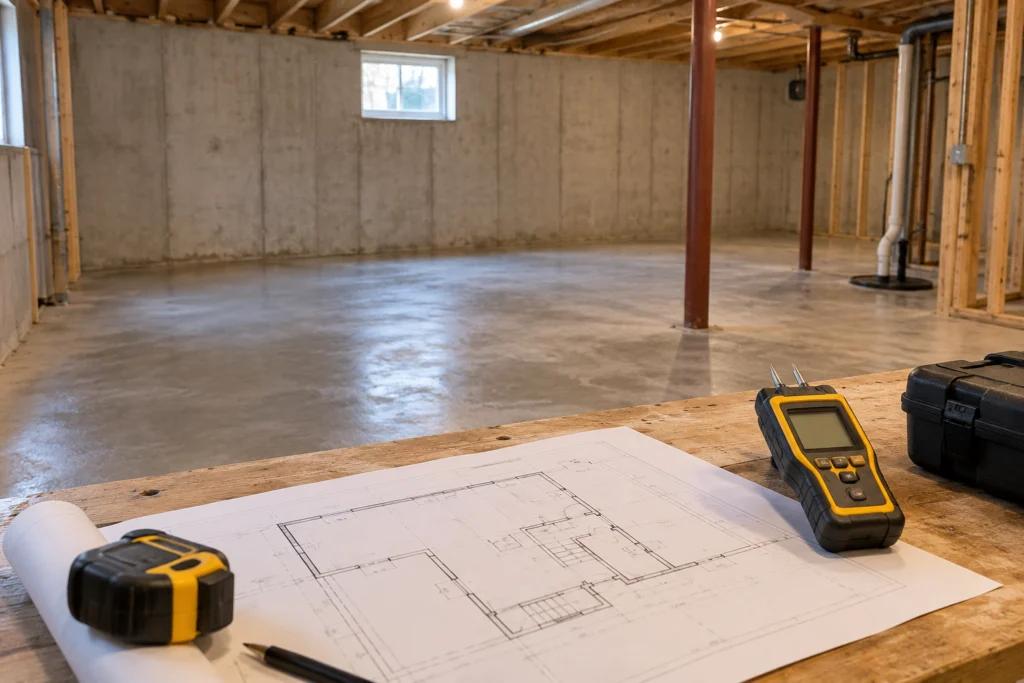
A new basement floor can hide the surface of a problem without removing its cause. Before choosing a finish, establish what is happening to water and moisture in the room. A dry-looking afternoon is not enough to describe conditions through the year.
Separate observations from explanations
Record where marks appear, whether there is an odour and what the weather was like beforehand. Photograph the same locations over time. Dampness near a wall, condensation on a cold surface and a plumbing leak can require different investigations; a homeowner’s record should not pretend to diagnose them.
If water is active, materials are deteriorating or there is suspected mould, arrange appropriate professional assessment before enclosing the area. Do not treat a floor underlay as a substitute for resolving building moisture.
| Item | Ask about | Record for the installer |
|---|---|---|
| Moisture history | Leaks, seasonal changes and previous repairs | Dates, photographs and locations |
| Slab condition | Cracks, coatings and flatness | Existing treatments and visible damage |
| Product testing | Tests and acceptance limits required by the manufacturer | Method, results and responsible person |
| Whole assembly | Subfloor, underlay, adhesive and perimeter details | Exact compatible product codes |
Read the limits for the complete floor
Some products tolerate particular moisture conditions only when a specified system is installed correctly. Ask the installer to explain which test results are needed and who decides whether they meet the selected manufacturer’s requirements.
Keep environmental requirements in the plan. An unheated basement used occasionally may differ from a regularly conditioned room. A floor described as suitable for a basement is not automatically suitable for every basement.
- Keep access to drains, cleanouts and service points in the design.
- Resolve the source of active water before ordering the finish.
- Request written preparation and testing assumptions in the quotation.
- Retain results and product instructions with the installation record.
Budget for uncertainty before removing the old floor
Removal may reveal residue, uneven areas or damage that was not visible during quoting. Agree how additional preparation will be assessed and approved. A contingency is more useful than an unrealistically low price that excludes everything beneath the finish.
Where an older material or adhesive may require special handling, seek qualified advice before disturbing it. The contractor should identify their proposed removal method and any assessment needed, rather than beginning with uncontrolled scraping or sanding.
Questions and answers
Can I judge slab moisture by touching it?
Touch is not a substitute for the tests required by the flooring manufacturer. A qualified installer should identify the appropriate method and acceptance limits.
Does waterproof flooring fix a damp basement?
No. The finish does not remove a leak, condensation source or other building problem. Water can still affect the substrate and adjacent materials.
Should I buy the floor before the assessment?
A preliminary shortlist is reasonable, but committing to a product before confirming conditions can create an expensive mismatch. Resolve the installation requirements first.