Home Guides
Simple wall protection for a family equipment corner
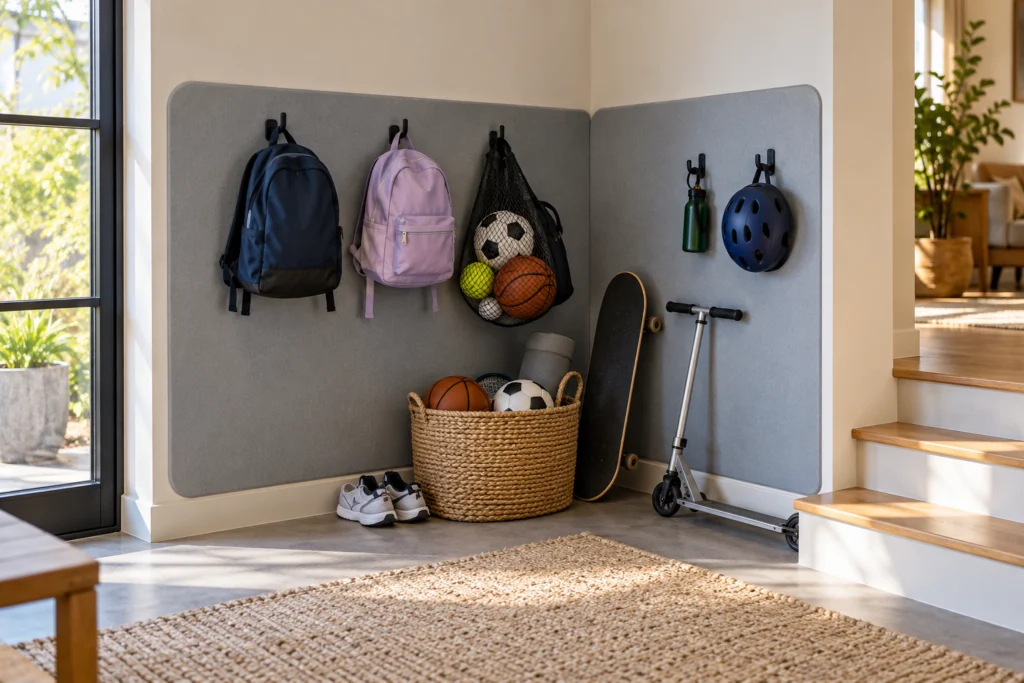
Sports bags and bicycle handlebars can leave a wall marked long before the rest of a room needs decorating. A protective finish works best when it follows the contact points. Covering an entire room with a heavy panel may cost more and make future repairs harder than a smaller targeted solution.
Find the actual impact area
Put the usual equipment in its normal position and note where it touches the wall. Include the movement used to lift a bag or turn a handlebar. Mark the contact zone with removable tape before measuring a panel.
Check the surface behind the proposed protection. Loose paint, damp patches or damaged wallboard need attention first. A washable face does not make an unsuitable substrate sound or dry.
| Approach | Useful quality | Question to resolve |
|---|---|---|
| Washable paint | A simple finish for light marks | Which cleaning method is permitted? |
| Replaceable panel | A defined sacrificial contact zone | How are edges, fixings and repairs handled? |
| Rail or stand-off | Keeps selected equipment from the wall | Does the mounting support the expected load? |
| Storage redesign | Removes the repeated contact | Can people still retrieve items easily? |
Make the edges part of the detail
A thin panel with a rough exposed edge can snag clothing or look unfinished. Discuss edge trims, joints and the transition to the baseboard. Avoid creating ledges that catch dirt in a wet equipment area.
Locate switches, outlets and other services before planning fixings. Use an appropriate installation method for the wall construction. If you cannot identify what is behind the surface, obtain competent installation help rather than drilling on an assumption.
- Measure contact height while equipment is being moved, not only while stored.
- Choose a finish whose cleaning instructions suit the household.
- Keep sharp corners and projecting hardware out of circulation routes.
- Allow wet equipment to dry without holding moisture against the wall.
Plan for replacement rather than perfection
A protective area is allowed to show use. A small replaceable section may be more practical than an expensive finish that is difficult to match later. Keep the product reference and fixing arrangement in the household project file.
Try relocating hooks or adding a stable equipment stand before buying panels. Preventing a hard edge from swinging against the wall can be more effective than repeatedly repairing the same contact point.
Questions and answers
Is a hard panel always necessary?
No. Light scuffs may be managed with a suitable cleanable finish and a better storage layout. The intensity and type of contact should determine the response.
Can I glue a panel over damp paint?
That conceals a problem rather than resolving it. Establish why the wall is damp and follow the panel maker’s substrate requirements before installation.
How high should the protection extend?
Measure the actual equipment and its movement. There is no useful universal height for every family or activity; leave an allowance for the items likely to be used.