Home Guides
Keeping leftover building materials organised after a project
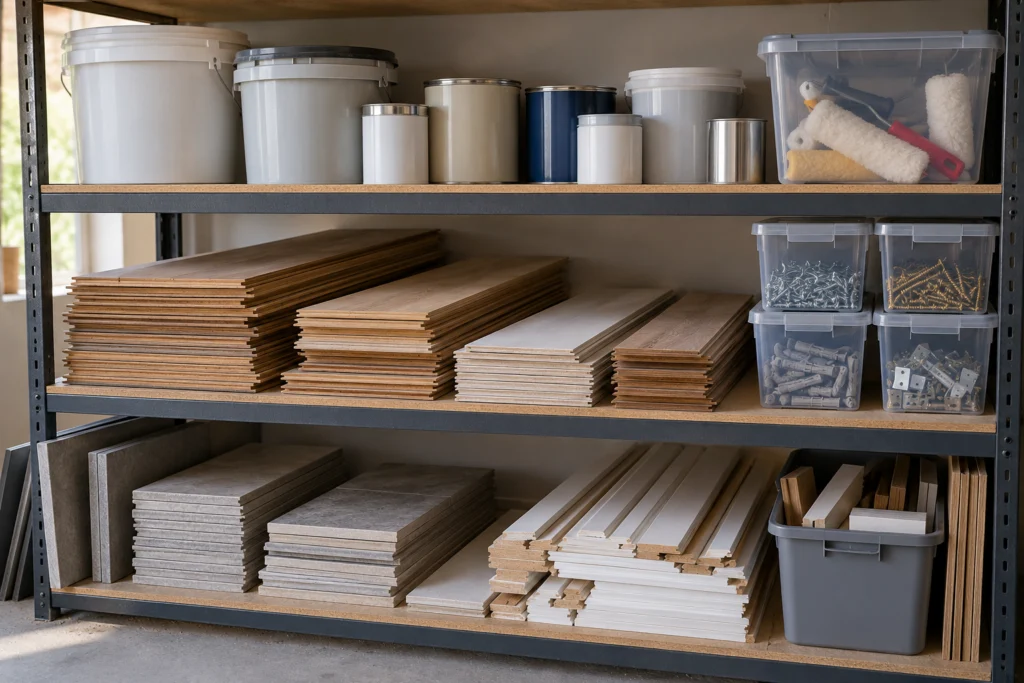
Leftover materials are useful when you can identify them and when storage has preserved their condition. An unlabelled pile of boards and half-used containers may occupy space without supporting any future repair. Sort the remainder while the project details are still easy to find.
Keep the identity with the material
Record the product code, colour, batch where available and room where it was used. Attach a copy of the relevant invoice or installation note to the storage record. A photograph of the packaging can help, but keep the actual care and safety information too.
Separate full pieces from small offcuts. Describe usable dimensions rather than assuming every cut can replace a damaged board. If the product requires particular storage conditions, make those conditions part of the decision to keep it.
| Category | What to retain | What to check |
|---|---|---|
| Flooring or tile | Identifiable repair pieces | Batch, usable size and dry storage |
| Door hardware | Compatible spare components | Labels and complete fixings |
| Coatings or adhesives | Only suitable labelled containers | Shelf life, closure and storage instructions |
| Unidentified scraps | A reason to keep each item | Whether safe reuse is realistic |
Respect container and storage instructions
Do not transfer chemicals into food or drink containers. Keep labels readable and containers secure according to the product instructions. Some leftovers may be unsuitable to retain after opening or beyond their stated storage life.
For disposal, check the local municipality’s current process for the particular material. Do not pour unwanted coatings or other building chemicals into drains or assume ordinary household waste is appropriate.
- Photograph product labels before packaging is discarded.
- Store repair pieces where they will not become damp or distorted.
- Label a shelf or bin with the room and project date.
- Review the collection before buying more material for a later repair.
Set a limit on speculative storage
Keep a modest, documented repair reserve rather than every scrap. Long items need stable support and should not project into a walking route. Heavy supplies belong where they can be retrieved without an unsafe lift.
A simple inventory can say what exists, where it is and when it should be reviewed. If the original floor or fixture is replaced later, remove obsolete leftovers through an appropriate reuse or disposal route instead of keeping them indefinitely.
Questions and answers
Can old adhesive be used if it still looks normal?
Appearance does not establish usability. Check the product’s shelf life, storage history and manufacturer instructions before considering reuse.
Should I keep every flooring offcut?
No. Keep identifiable pieces that could meet the product’s repair and installation requirements. Very short or damaged scraps may not be useful.
Is a garage always suitable storage?
Not for every product. Temperature, moisture, container security and the manufacturer’s limits matter. Choose the location based on those requirements.