Home Guides
Planning a small home workout area before buying materials
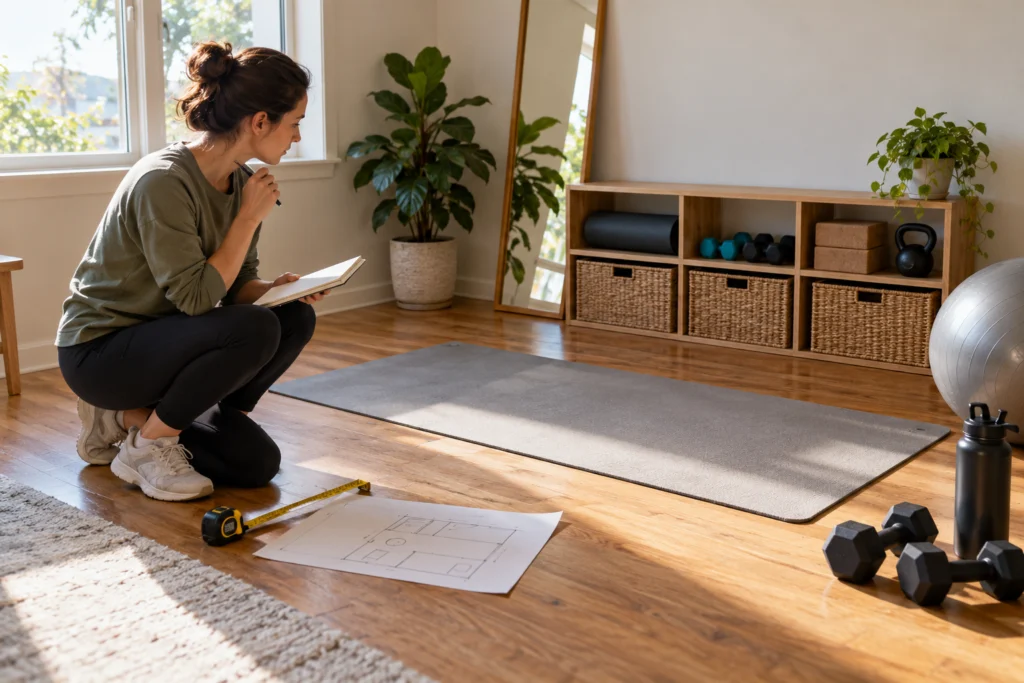
The useful size of a workout area is the space left while you move, not just the rectangle beneath a mat. A compact room can work for a modest routine when doors, furniture and storage are planned together. Buy materials after that movement has been tested.
Define the routine the space actually needs
List the activities you already do or have been advised to do, along with any equipment. Avoid designing around a large machine you have not measured. A stretching corner and a stationary bicycle have different clearance, access and cleaning needs.
Use removable tape to outline the proposed zone. Open nearby doors, pull out drawers and walk through the room while equipment would be in use. Include the area required to get on and off a machine according to its instructions.
| Use | Planning question | Material check |
|---|---|---|
| Floor exercises | Can you lie down and change position freely? | Mat compatibility with the existing finish |
| Stationary equipment | What clearance does the maker require? | Load, vibration and manufacturer guidance |
| Weights or accessories | Where are items returned after use? | Storage stability and protection from impact |
| Shared household room | Can the area be cleared easily? | Cleaning, mat storage and trip-free edges |
Protect the floor without trapping problems
Read both the mat and flooring instructions. Some backings or cleaning products may be incompatible with a finish. Moisture beneath a mat should not remain hidden; allow a practical way to lift, clean and dry the area.
Do not assume a foam layer makes every floor suitable for heavy equipment or impacts. Where structural capacity, excessive vibration or an upper-floor installation is uncertain, ask a qualified professional before purchasing equipment.
- Record equipment dimensions and operating clearances from its manual.
- Keep access to exits, windows and building services clear.
- Choose storage reachable without stepping over loose equipment.
- Plan enough light to see edges and items on the floor.
Price a complete usable corner
Include edge treatments, storage, floor protection and delivery in the budget. A cheap mat is not a saving if it prevents the door from opening or cannot be stored safely. Leave decorative finishes until the basic layout works.
Rehearse a short ordinary session using the taped outline and existing small items. Note where towels, water and accessories land. Those observations often identify a useful shelf or hook more accurately than a catalogue layout.
Questions and answers
Can I put a workout mat on any floor?
Check both products first. Backing materials, trapped moisture and movement can affect the underlying finish. Inspect the floor regularly rather than leaving a mat untouched indefinitely.
Does a larger machine make better use of the corner?
Only if it matches your routine and fits with its required clearance. An accessible open area may provide more flexibility than equipment that crowds the room.
Should I renovate before trying the space?
A reversible layout trial is usually useful. Resolve structural, electrical or moisture concerns professionally before committing to permanent work.