Home Guides
Interior doors that help separate work, rest and noisy hobbies
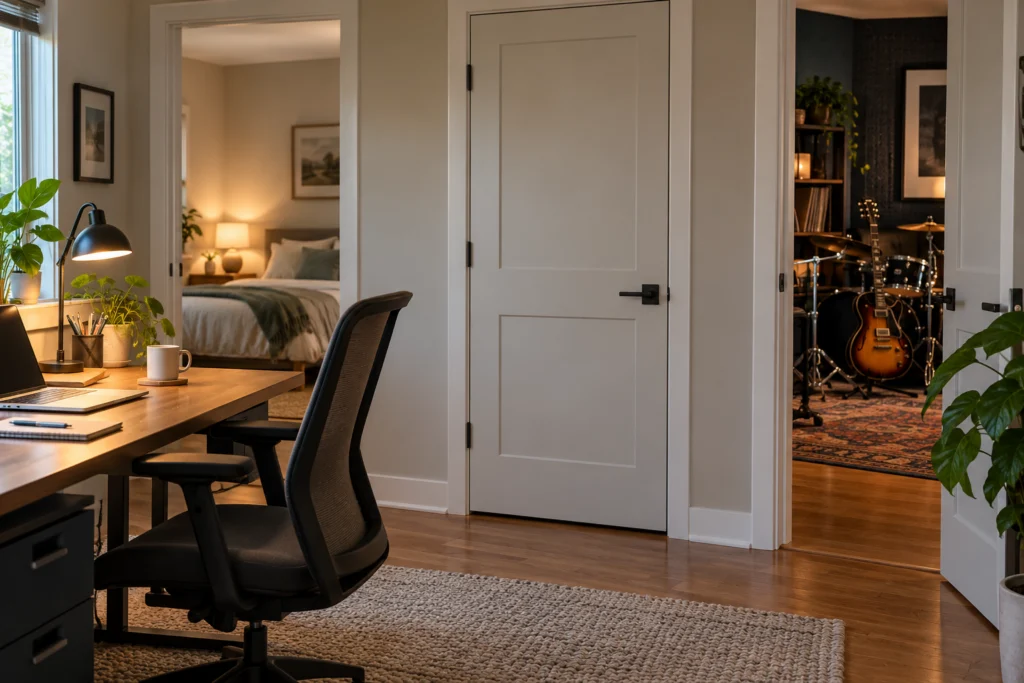
Closing a door can make a home office feel separate from a busy hallway, but the result depends on more than the slab. Gaps, the frame and sound travelling through other parts of the building can all limit the improvement. Start with the disturbance you want to reduce.
Describe the conflict in ordinary terms
Write down when noise matters, where it starts and who needs quiet. A sleeping shift worker beside a hobby room has a different problem from occasional conversation outside an office. A door purchase should follow that description, not replace it.
Check whether the intended room must retain ventilation, accessibility or other features. Alterations to a rated door or a required building assembly need appropriate professional advice. Do not remove hardware or add seals that interfere with safe operation.
| Component | What to ask | What to observe |
|---|---|---|
| Slab | Construction and available test information | Weight, handling and visible damage |
| Frame | Compatibility with the proposed door | Straightness, fixing and latch alignment |
| Perimeter | Suitable seals for this application | Gaps and whether the door closes freely |
| Threshold area | Permitted treatment and floor clearance | Trip risk and movement between rooms |
Check swing and daily access
Mark the swing on the floor before ordering. A door can fit its opening yet collide with a desk chair, wardrobe or exercise equipment. Confirm the direction of operation and the space needed by the people who use it.
Measure the finished floor level rather than relying on the bare subfloor. A planned rug, new floor covering or transition can change the clearance. Include hinges, handle positions and the existing frame condition in the installer’s site check.
- Identify whether the aim is privacy, reduced distraction or a tested acoustic requirement.
- Ask for evidence describing the complete tested assembly, where a performance claim matters.
- Inspect alternate sound paths before spending heavily on one door.
- Keep ventilation and required fire-safety features within the professional design.
Try low-disruption changes first
Moving speakers away from a shared wall, changing hobby hours or relocating a desk may reduce the conflict without building work. These changes also help reveal whether the doorway is the main path for the disturbance.
Obtain a written specification if replacing the door. It should identify the slab, frame treatment, hardware, seals and finishing work, not simply promise a “quiet room”. Confirm what is excluded and how closing or latching problems will be corrected.
Questions and answers
Will a solid door make a room soundproof?
No door alone can guarantee that. Sound may pass around it or through walls, ceilings and services. Use tested assembly information when a defined acoustic result is required.
Can I seal every gap?
Not without checking the room and door requirements. Ventilation, safe operation and rated assemblies may constrain what can be changed.
Should all internal doors match?
They can share a visual finish while having different constructions or hardware for different rooms. Suitability and correct installation are more important than identical specifications everywhere.